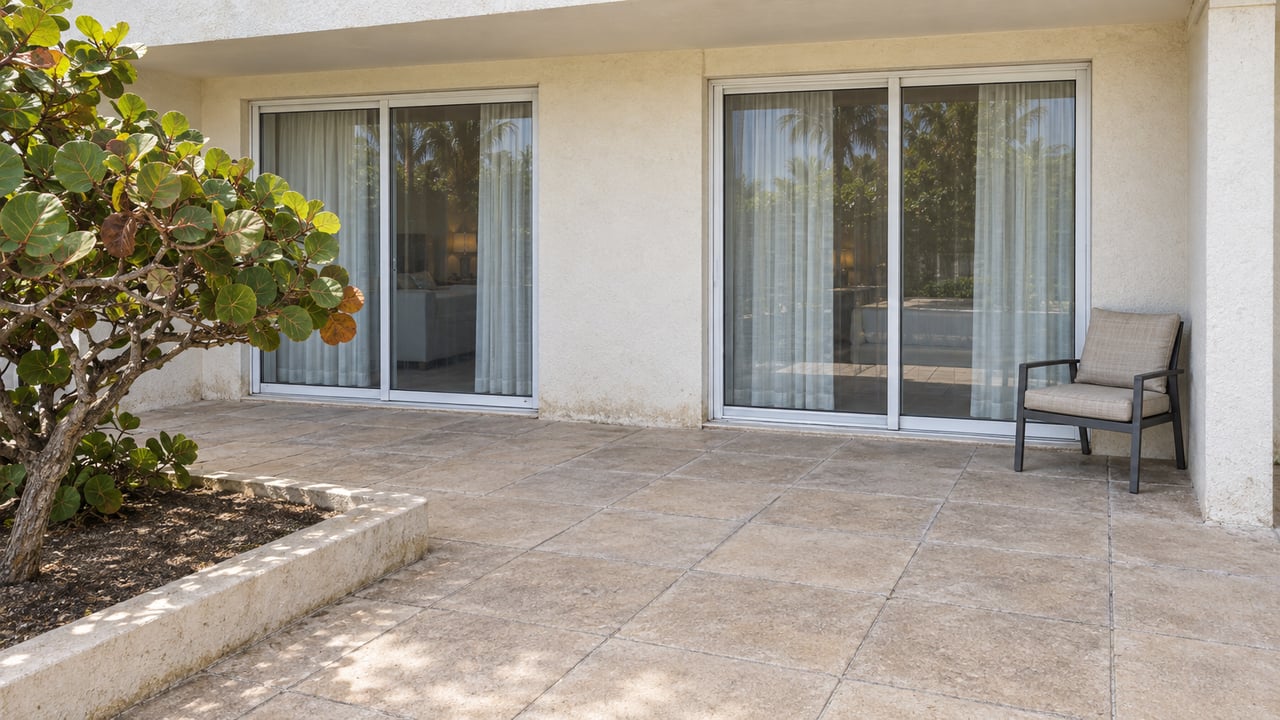
In Indian Shores, the paperwork that decides how much sand lands in front of a Gulf-front building is the construction easement its owners did or didn't sign. When Pinellas County began the 2025 nourishment, it said the Sand Key portion would be built with gaps. More than 30 of the missing easements belonged to Indian Shores property owners. Where no easement existed, the County said sand would still go landward of the Erosion Control Line where possible, and some low spots would remain where sand would otherwise have gone.
That background explains the town's new beach ordinance. On September 9, 2026, the Indian Shores Town Council voted 4-0 to pass Ordinance No. 2026-03 on first reading. It recognizes the public's customary use of the dry sand on the town's beaches. Most coverage frames it as a public-access question. A buyer comparing Gulf-front condos gets more out of reading it as a sand-funding question, because the ordinance only covers a narrow strip of private sand. The money tied to it decides how wide the whole beach stays.
The Boundary Was Fixed in 1991
Before anyone argues about public use of private sand, there's a basic question: how much of the sand is private? On a nourished Florida beach, Section 161.191 of the Florida Statutes gives the state title to land seaward of a recorded Erosion Control Line and gives the upland owner title to land landward of it. Once the line is recorded, sand building up or washing away generally doesn't move the private boundary.
Indian Shores' lines are old. Pinellas County's coastal GIS records show the town's ECL segments recorded on August 20 and 21, 1991, under the names "Indian Shores Beach Access Phase 1A," "Indian Shores Phase 1B," and a Phase II segment. The County says an ECL is usually set at mean high water before the first nourishment. After repeated nourishment cycles, the line often sits inside the dunes.
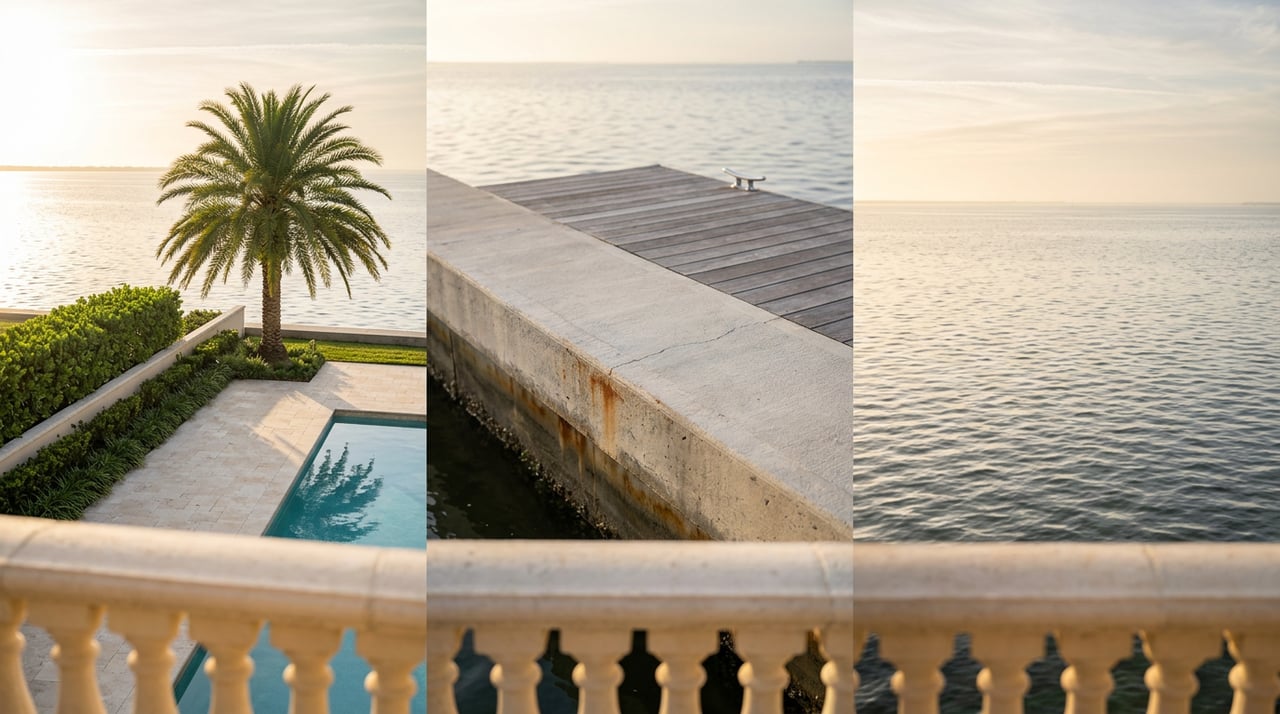
So a wide, sunny beach in front of a building is no sign that the building owns it. Much of that sand was added seaward of a line drawn 35 years ago, and under Florida law it belongs to the state. The ordinance covers whatever private dry sand sits between the ECL and the dunes or structures. On a given parcel, that strip can be much smaller than a listing photo suggests.
The Strip the Ordinance Covers
The town's proposed customary-use ordinance creates Section 54-7 of the town code. It defines dry sand as the area running landward from the mean high-water line to a marked change in material or landform, or to the line of permanent vegetation, whichever is more seaward. On privately owned dry sand, it lists nine permitted public uses:
- Walking across the beach
- Sitting, standing, or lying on the sand, in a beach chair, or on a towel or blanket
- Using an umbrella, canopy, sun shelter, or other shade device
- Sunbathing
- Picnicking
- Fishing
- Swimming or surfing off the beach
- Setting down surfing or fishing gear for personal use
- Building sand creations
The public may not use a 15-foot buffer measured seaward from the toe of the dune or from a privately owned permanent habitable structure, whichever is farther seaward. The buffer has exceptions for reaching a public beach access, for emergency and government workers, and for anyone the owner invites in. The draft calls the buffer a voluntary accommodation to private property rights, not a surrender of the public's claim. It also says owners may use their dry sand in any way that fits with the customary public uses and isn't meant to interfere with them.
The town says its existing ordinances already protect customary use effectively. It describes the new section as a way to "further bolster and clarify" that use. At the September 9 meeting, Mayor Diantha Schear pointed to the monument the town dedicated in July 2022 at James J. Lawrence Veterans Park. She said it depicts the Tocobaga net fishing from the beach, an example of the beach's ancient use.
Why This Is Happening in 2026
The timing traces back to a May 29, 2026 amendment to Pinellas County's Project Cooperation Agreement with the U.S. Army Corps of Engineers. Under the amendment, nourishment easements no longer need to include public access and use provisions. Some federal cost-sharing requirements can now be met through local customary-use ordinances, and easements no longer have to be permanent.
The amendment matters because of the money. The County says the federal cost share has traditionally covered about 65% of project costs, leaving the County about 17.5% after state grants. Without federal participation, commissioners approved a $125.7 million nourishment in 2025 paid with county and state money, according to WUSF.
The County's customary-use page draws the connection directly. Adopting these ordinances meets Corps requirements for federal funding and keeps the full Sand Key project eligible. If one segment fails to qualify, the whole project is at risk. Indian Rocks Beach adopted customary use in 2018. Indian Shores and Redington Shores are considering it. In Redington Shores, a February 2026 workshop record shows County Commissioner Brian Scott and Public Works Director Kelli Hammer-Levy urging an ordinance to help with federal easements. Commissioners there raised litigation concerns.
The ordinance doesn't replace easements. The County still needs construction easements from every beachfront property in a nourishment project. As of May 2026, 70% of properties in the Sand Key project area had signed and recorded compliant easements. WUSF put it this way: about three in 10 properties are still outstanding, and parts of the shoreline could be affected if the County can't get them. What the ordinance changes is the request. Owners are now asked for a construction easement without public-access language in it.
The Court Step Was Removed in 2025
Under Florida's 2018 rule, a local government needed a court to confirm customary use before it could adopt or keep such an ordinance. That process included certified-mail notice to affected owners and a circuit court complaint. Chapter 2025-178, approved June 24, 2025, repealed that statute. According to the Senate bill summary, local governments can now declare customary use without going to court first. An owner who disagrees can challenge the ordinance, and courts weigh the common-law doctrine case by case.
The closest local precedent is in Redington Beach. WUSF reported that in August 2024, a federal district judge upheld that town's 2018 ordinance, finding the town had proved customary use of privately owned dry sand. Waterfront owners filed a notice of appeal in September 2024. We found no public record of how the appeal ended. That case was decided under the old statute and says nothing about Indian Shores' parcels.
Indian Shores is collecting evidence anyway. Pinellas County held an informational presentation on August 26, 2026 at the Indian Shores Municipal Center, 19305 Gulf Blvd. It's asking for photographs, home video, news clippings, brochures, and affidavits that show historic public use, sent to [email protected].
A Due-Diligence Order for a Gulf-Front Contract
For a buyer, the ordinance's practical effects come down to a few documents that can be pulled before the inspection period ends:
- Compare the ECL to the legal description. The County's erosion control line map shows where state land begins. A surveyor can tell you how much dry sand, if any, the parcel or condominium actually holds.
- Check the building on the easement map. The County tracks valid Corps easements on its Beach Nourishment Easement Acquisition map.
- Read the easement type, not just whether one exists. Pinellas County says temporary construction easements recorded for the 2024 project expire December 31, 2029 and don't qualify for federal funding. Perpetual easements recorded earlier remain valid.
- Ask the association for board minutes on easements. For a condominium, the decision to sign is a building-level decision that affects every unit's beach.
- Compare listing language with the map. Phrases like "private beach" in STR listing copy or condo rules should match what the ECL and the ordinance allow. Guest beach rules may need updating if Section 54-7 is adopted.
This list is due diligence, not legal advice. Title and boundary questions belong with a Florida real estate attorney and a licensed surveyor.
FAQ
Has Ordinance 2026-03 been adopted?
Not as of October 4, 2026. It passed first reading on September 9. The September 21 special-meeting agenda didn't include it and listed October 13 as the next Town Council meeting. When we checked on October 4, the town's Agenda Center listed council agendas only through September 21, and no October 13 agenda had been posted.
Does the ordinance change who owns the sand?
The draft regulates use. It recognizes public uses of privately owned dry sand, and owners keep the right to use their property in ways that fit with those uses. Ownership is still set by the recorded ECL.
When is the next federally funded Sand Key nourishment?
No construction date has been published. WUSF reported in August 2026 that the Sand Key sixth nourishment is in the County's proposed FY 2027-32 Capital Improvement Plan. It also reported that the state expects to add $16 million to its funding agreement around April 2027.
If you're weighing a Gulf-front condo or beach home in Indian Shores, Kirsten Kelley can go through the ECL map, the building's easement status, and the association's records with you before your inspection window closes. Schedule a Consultation to get that review on the calendar.